


You Asked. I Went Down the Rabbit Hole…
One of the readers of this substack article asked for names. I absolutely agreed! So I had to take the deep dive into trying to discern where to find the little buggers.
Product recipes vary by flavor, package size and country, and manufacturers reformulate. The examples below were checked against ingredient information available.
Always verify the package in your own pantry.
THE 3 CODES TO SCAN FOR

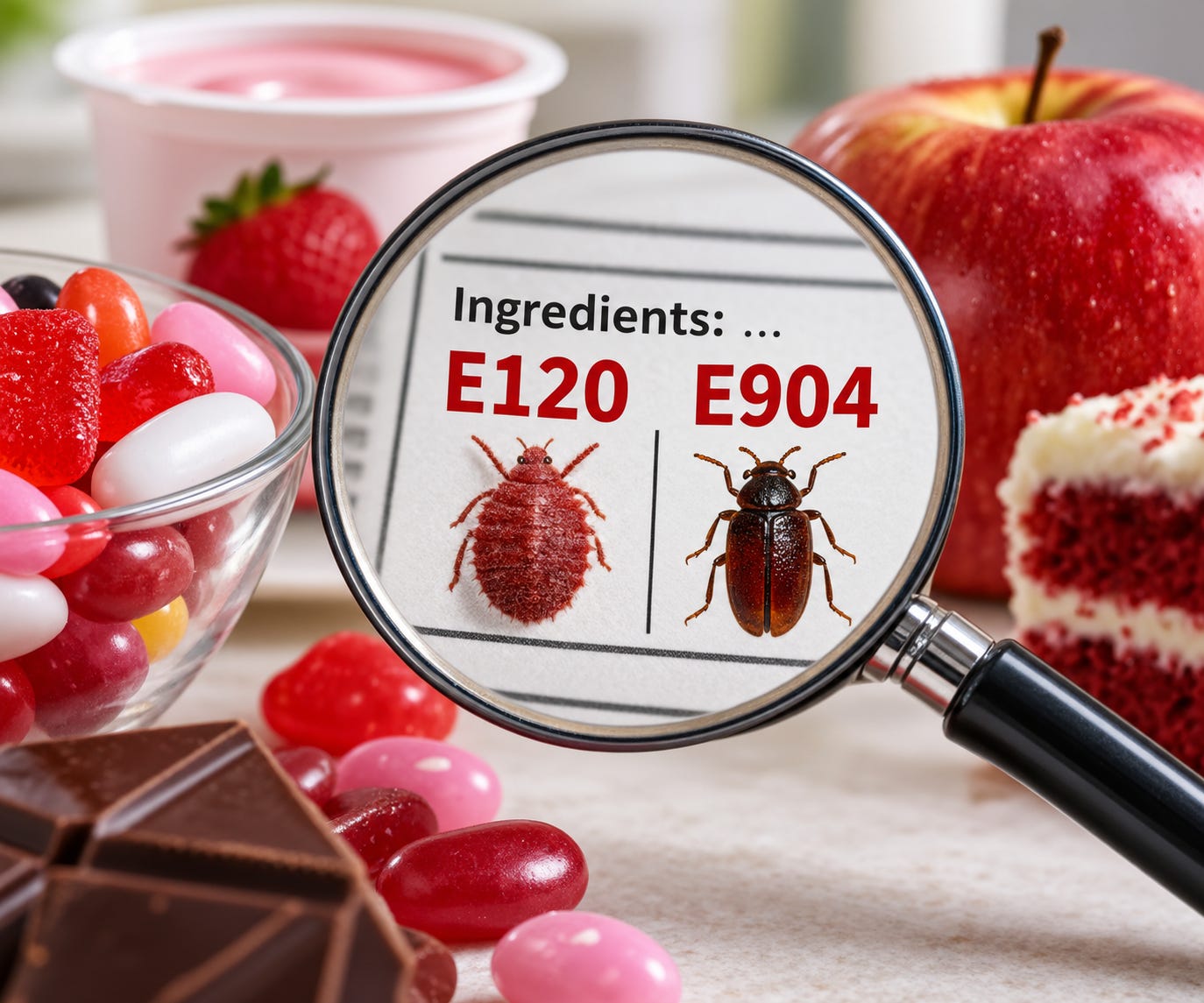
These are all insect-derived, but they are not “whole insects” or insect protein. Carmine is produced from processed cochineal insects; shellac is a purified lac-insect secretion; beeswax is a bee product.
Also, U.S. labels generally will not say E120/E904/E901. Those are European additive numbers. In the U.S., look for the ingredient names, not just the E-numbers.
Check Out These Categories and Products
Create your own checklist!
Candies & Confections (E120 & E904)
Nerds Gummy Clusters
Good & Plenty
Mentos Rainbow
Jelly Belly (red/pink flavors has BOTH E120 AND E904)
Maraschino cherries
Red lollipops
Red sprinkles
Hershey’s Whoppers
Hershey’s Milk Duds
Nestlé Raisinets
Nestlé Goobers
Junior Mints
Sugar Babies
Some Godiva glazed/chocolate-coated products:check label.
Russell Stover jelly beans
Candy corn
Easter / Halloween candy
Coated chewing gum
Yogurts & Dairy (E120)
Yoplait Strawberry / Cherry
Store-brand fruit yogurts (some)
Strawberry / raspberry / cherry ice cream
Sorbets & sherbets (pink varieties)
Beverages (E120)
Pink lemonade
Pink grapefruit juice
Fruit-flavored squash & cordials
Fruit punch & sports drinks
Processed Meats & Other (E120)
Sausages
Deli meats
Fish-meat sausage
Jams & sauces (red varieties)
Red velvet cake & baked goods
My husband is a big deli meat fan, so I went on the hunt as to which deli brands in particular to watch out for. What I learned is that specific U.S. brands are hard to pin down because most major US brands don’t list carmine on their labels. But European and specialty brands do and they’re explicit about it.
The studies I found are very clear that carmine is widely used in processed meats: it was the #1 dye found in Polish meat products, and it’s documented in salami, chorizo, sausages, and luncheon meat. But the specific brand names differ by country and market.
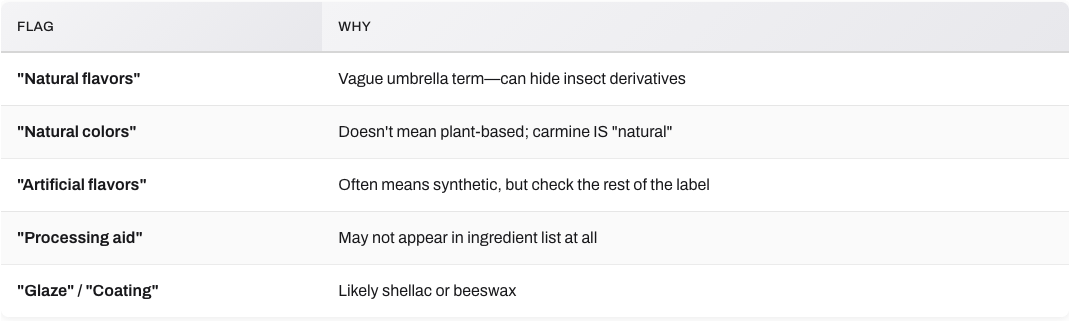
If you’re buying European or specialty chorizo, salami, or sausages, check for “carmine,” “cochineal extract,” or “E120” on the label. If you’re buying US brands, check for “natural flavors” and “natural colors,” because those vague terms can hide insect derivatives.
The honest answer is: the US brands hide it behind “natural flavors.” The European brands put it right on the label. That’s the difference between disclosure and obscurity.
Fruit & Other (E904)
Waxed apples & citrus
Coffee beans (some)
Vitamin / supplement tablets
Liquid medications
If you don’t see an E-number, look for these words:
Cochineal / Cochineal extract
Carmine
Natural red 4
Crimson lake
Confectioner’s glaze
Resinous glaze
Candy glaze
Lac resin
Shellac
Beeswax / Cera alba
Shellac can hide in plain sight under several names. Look for “confectioner's glaze,” “candy glaze,” “lac resin,” “resinous glaze,” or “shellac.” Purified shellac is used as a surface-finishing agent and may also have a regulatory function as a processing aid. Ingredient declarations and formulations vary, so check the actual package.
“Hard-coated” candy = could be shellac
“Shiny” / “glazed” fruit = likely shellac
“Waxed” apples = likely shellac
INSECT-DERIVED INGREDIENT NAMES TO KNOW.
THE NEXT WAVE: WHOLE INSECT PROTEIN
Being marketed as “sustainable” and “climate-friendly”: watch for these:
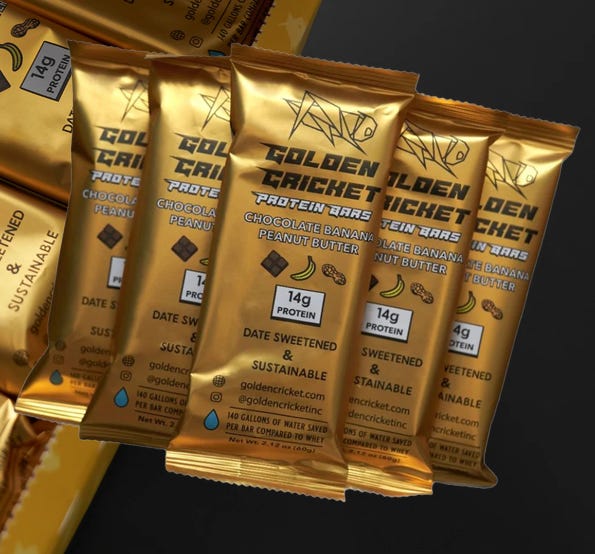
Cricket flour → protein bars, pasta, baked goods, snacks
Mealworm → protein bars, snacks
Insect-based toddler snacks → Insect protein is also entering the human-food market. Look for explicit ingredient names such as cricket powder/cricket flour, Acheta domesticus, mealworm/Tenebrio molitor, or insect protein. These are fundamentally different from insect-derived colorants and glazing agents such as carmine and shellac.
SAY YES TO:
Whole, single-ingredient foods
Labels you can fully read and understand
Products where you recognize every word
I couldn’t help myself on this one…
FAQ: Are Insect Products GMO?
The Short Answer: The insects themselves aren’t GMO. But they’re being fed the waste products of the GMO-industrial food system and whatever goes into the feed goes into your child’s food.
The Insects Themselves: Not Genetically Modified
The species being farmed for food, house cricket (Acheta domesticus), yellow mealworm (Tenebrio molitor), black soldier fly, and locust are conventional species. There’s no “GMO cricket” being sold as food right now.
But, this is the part parents need to know, that doesn’t mean they’re clean.
The Real Problem: What the Insects Are Fed
Here’s where it gets interesting. Insect farming is a “bioconversion” industry. The whole pitch is that insects can eat anything and turn it into protein. And what do they feed them?
Food waste and byproducts from industrial agriculture
GMO crop waste: corn, soy, and other GMO feed crops
Manure and agricultural byproducts
Processing waste from food manufacturing
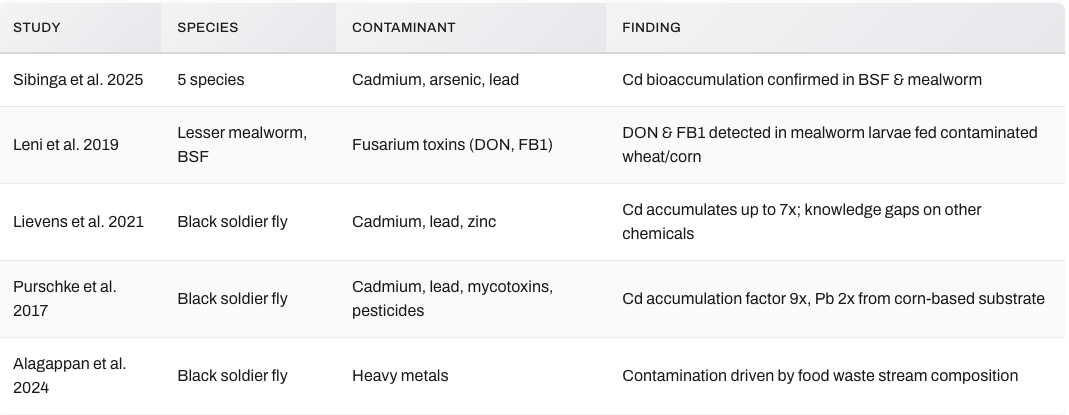
The EU’s own EFSA opinion on house crickets noted that “…the concentration of contaminants in the NF depends on the occurrence levels of these substances in the insect feed.”
In other words: whatever the insects eat, ends up in your child’s food. If the crickets are fed GMO corn or soy, the residues and the associated pesticides, herbicides like glyphosate, and mycotoxins can accumulate in the insect protein.
The Deeper Connection: Why “Sustainable” Insect Protein Serves the Industrial Food Machine
The insect protein industry is being pushed as a “climate solution” and a “sustainable protein”, but it’s actually a way to:
Monetize the waste stream of industrial agriculture (GMO crops, food processing byproducts)
Recycle the byproducts of the very system that’s making our children sick
Normalize eating insects so the food industry can reduce its reliance on traditional animal agriculture
It’s not a return to natural, whole foods. It’s an industrial solution to an industrial problem and it’s being sold to parents as “sustainable” and “clean.”
This is the same pattern we've been fighting for 25 years: the industry takes an industrial byproduct, rebrands it as a "solution," and sells it to parents as healthy.
The Bottom Line
The insect protein wave isn’t just about eating bugs. It’s about recycling the industrial food system’s waste into our children’s food and calling it “sustainable.”
The insects aren't GMO. But the research shows that what they're fed such as industrial waste, GMO crop byproducts, and contaminated substrates determines what ends up in their bodies. Cadmium bioaccumulates up to 9x in black soldier fly larvae. Mycotoxins from contaminated corn and wheat transfer to mealworm larvae. And the regulators themselves admit there are knowledge gaps about the chemical safety of insect protein.
Quick Reference Table
Read the labels. Know the codes. Protect your children.
makingourchildrenwell.com | Free bonus section for the new book | Share freely: disclosure is the mission.
Do not confuse “shelac” with the new insects as food protein industry.
A substance called shelac is indeed a crystaline substance extracted from the “shell” of the “lac beetle” which has been used as a clear wood coating And as a moisture and oxygen resistant coating on pharmaceutical tablets and capsules For Generations ( since the 1920s per my Pharmacy School training).
It has been included on the GRAS list since inception and challenged many times. It is true that the GRAS list has been abused by food processors and needs to be constantly challenged. The molecular structure ( chitin) of the lac beetle shell extract lends great credibility to its continued use as a protectant against harmful degradation of pharmaceutical chemicals.
If you have an in principle objection all you can do is refuse to take Any oral pharmaceutical or food suppliment with a hard glossy coating. The extract of the shell of the lac beetle is most likely present in traces- but without it the complex chemicals within the tablet or capsule are likely to have been degraded and may have converted into Other Chemicals which have Never been tested or approved for human consumption.
Excellent information. Thank you.